
Starting a career as a nail technician has become one of the fastest ways to enter the beauty industry.
A complete course gives you the technical training, hygiene knowledge and practical experience needed to serve clients confidently.
With the right nail technician courses, you can learn all the essential techniques and start working in a matter of months.
What the Course Covers
A full course combines theory and hands-on practice. You learn the anatomy of the nails, common disorders, sanitation rules, and workplace hygiene.
The course also covers natural nail services, including manicures, pedicures, nail shaping, cuticle care, and basic treatments.
Most programs then move into enhancement systems such as gel polish, acrylic nails, dip powder, gel extensions, and nail sculpting.
Many schools also teach customer service, salon regulations, marketing basics, and retail skills to help you build a steady client base.
Technical Skills You Will Learn
During training, you practise nail preparation, shaping, buffing, and surface balancing.
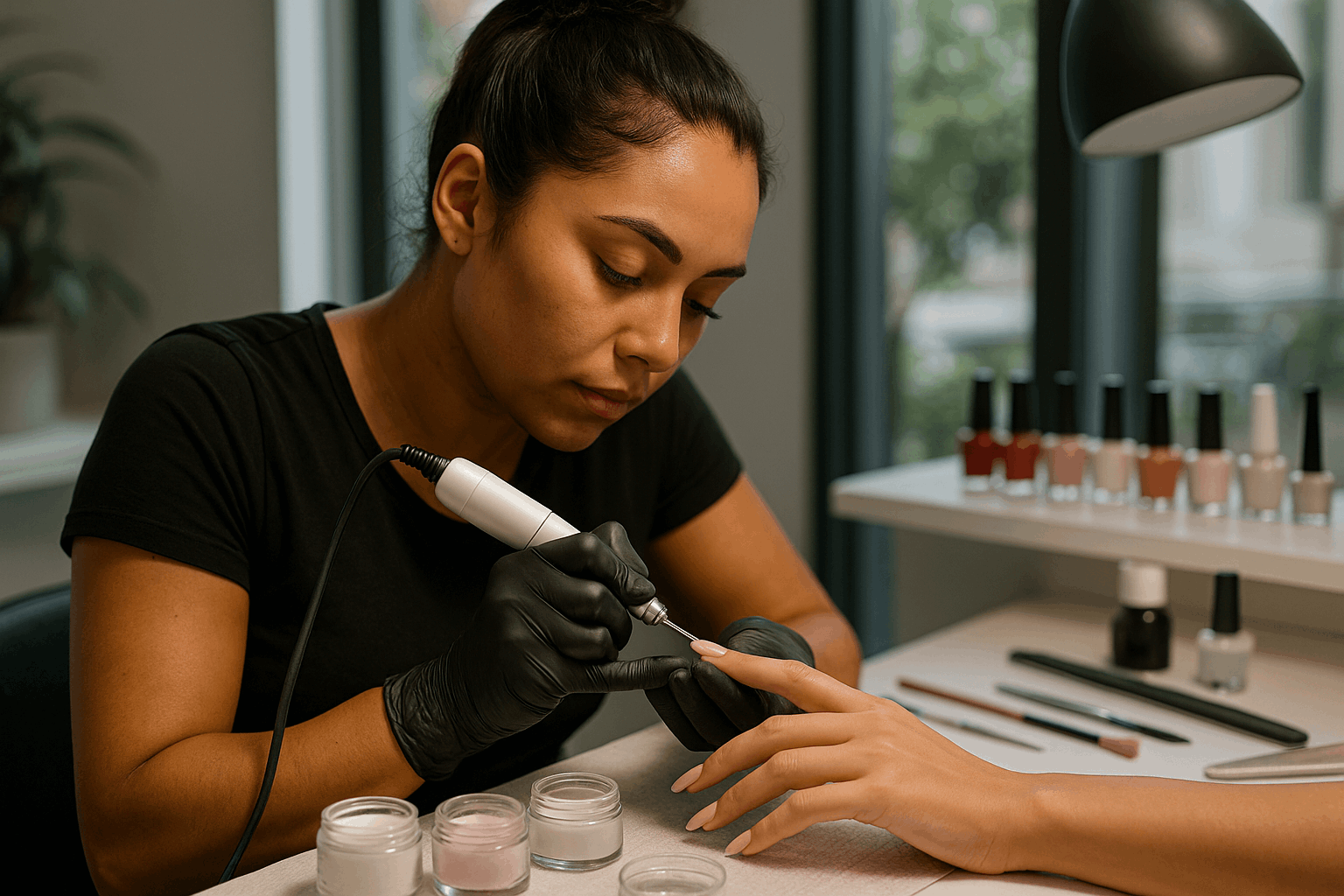
You learn how to apply gel polish, create acrylic or hard gel extensions, and perform fills, repairs, and removals safely.
Courses also introduce nail art techniques such as French tips, ombré finishes, glitter designs, and decorative overlays.
In addition, instructors demonstrate proper disinfection, infection-control procedures, and the correct use of tools.

Course Modules and Structure
Most programs divide content into structured modules.
Programs often end with a practical assessment or a mock licensing exam to prepare you for certification.
Some schools include business training such as client consultation, service pricing, appointment management and marketing strategies.
These lessons help new technicians understand how to attract and retain clients once they begin working.
Training Duration: How Fast You Can Start
Full-time programs can take three to four months, while more extensive diploma-level courses may last six months or more.
Part-time and evening classes often take longer but allow you to fit training around work or family commitments.
Short, specialized workshops may last only one or two days. These are usually optional add-ons rather than full qualifications.
Regardless of the format, practical training is essential, and most reputable programs require you to complete supervised hands-on practice before finishing.
Cost of a Nail Technician Course
Prices vary widely depending on the country, school and depth of training.
- In many regions, a full nail technician program costs between US$2,000 and US$9,000. This range includes tuition and basic materials but may exclude optional kits or advanced workshops.
- For example, some North American schools list complete programs around US$2,700 to US$3,500, with kits sometimes adding another US$500 to US$800.
- Larger diploma programs in Canada can cost around CAD$8,500 or more, especially if they include extended modules, multiple enhancement systems and additional business training.
- Short courses or boot camps can range from US$300 to US$800, especially if they focus on a single technique such as acrylics or gel nails.
- Online courses are usually cheaper, sometimes costing below US$50, but they often do not replace practical training required for licensing.
Certification and Licensing Requirements
Regions such as the United States, Canada, the United Kingdom and Australia often require graduates to pass a professional licensing exam.
These exams typically include written questions on sanitation, anatomy and regulations, along with a practical section demonstrating your skills.
Before enrolling, check your local requirements for training hours, approved schools, exam procedures and renewal rules.
Following these steps ensures you can work in salons, spas, mobile services or rented booths without facing regulatory problems.
How to Master Techniques and Start Your Career Quickly
To make progress fast, choose a comprehensive course that covers natural nail care and all major enhancement systems.
Focus on consistent practice, especially shaping, application techniques and finishing, since these affect durability and client satisfaction.
Building a portfolio of your work helps you stand out when applying for jobs or advertising your services.
Prepare your kit early so you can practise outside of class. High-quality files, brushes, gels, acrylic powders and lamps allow you to refine your skills at home.
Career Opportunities After the Course
Once certified, you can work in beauty salons, nail bars, spas or wellness centres.
Some technicians offer mobile services and visit clients at home, which can increase flexibility and earning potential.
Renting a chair or table in a salon lets you operate independently while still working in a professional environment.
Many technicians focus on gel extensions, acrylic sculpting, advanced nail art or luxury spa treatments.
Best Nail Technician Courses
Here’s a comparison of several good nail technician courses — it’s a quick at-a-glance summary so you can compare tuition, duration and location.
| School / Program | Location | Duration | Cost | Notes |
|---|---|---|---|---|
| Atelier Academy (USA) | Minnesota, USA | 350 hours | USD $3,400 tuition + USD $760 kit | Covers luxury pedicures, acrylics, gel, nail art. |
| Blanche Macdonald Centre Nail Tech Diploma | Vancouver, Canada | ~300 hours (15-26 weeks) | CAD $6,500 tuition + CAD $2,900 kit | Advanced techniques, business modules. |
| Wrapture Beauty Academy Nail Technician Diploma | Winnipeg, Canada | 16 weeks | CAD $5,565 tuition + ~CAD $1,058 supplies | Full in-person program, accredited. |
| Canadian Beauty School Online Certificate in Nail Tech | Canada (100% online) | 10-15 weeks | From CAD $36/week (kit included) | Flexible pace, home study. |
| Prestige Nail School (USA) Nail Technology Course | Las Vegas, USA | 600 hours | From USD $3,995 tuition | In-person, full & part-time, advanced options available. |
If you need flexibility (work, travel, other commitments) go with an online or shorter-duration program.
If you want full hands-on training and feel comfortable with in-person classes, choose the longer diploma programs.
If your region (city/country) has Licensing/Regulation requirements, pick a program that aligns with your local standards.
Consider after-training support: job placement help, portfolio building, business/marketing modules.
What to Check Before Enrolling
Before choosing a school, review the curriculum, hours of practice, accreditation status and licensing preparation.
Check whether the program includes a starter kit, if models are provided for practice, and whether the school offers job placement assistance.
Tuition policies, payment plans and refund options should also be clear.