In many countries, food assistance runs through a debit-style card that loads benefits monthly.
In the United States, that card is the Electronic Benefits Transfer card, and the process that unlocks it is the EBT Card Application for SNAP.
In this guide, the steps, documents, timelines, and the latest 2025–2026 rules are summarized in clear, practical language so you can act without guesswork. In most states, you can apply for SNAP online and track decisions quickly once the required information is submitted.
What an EBT card does and where applications are processed
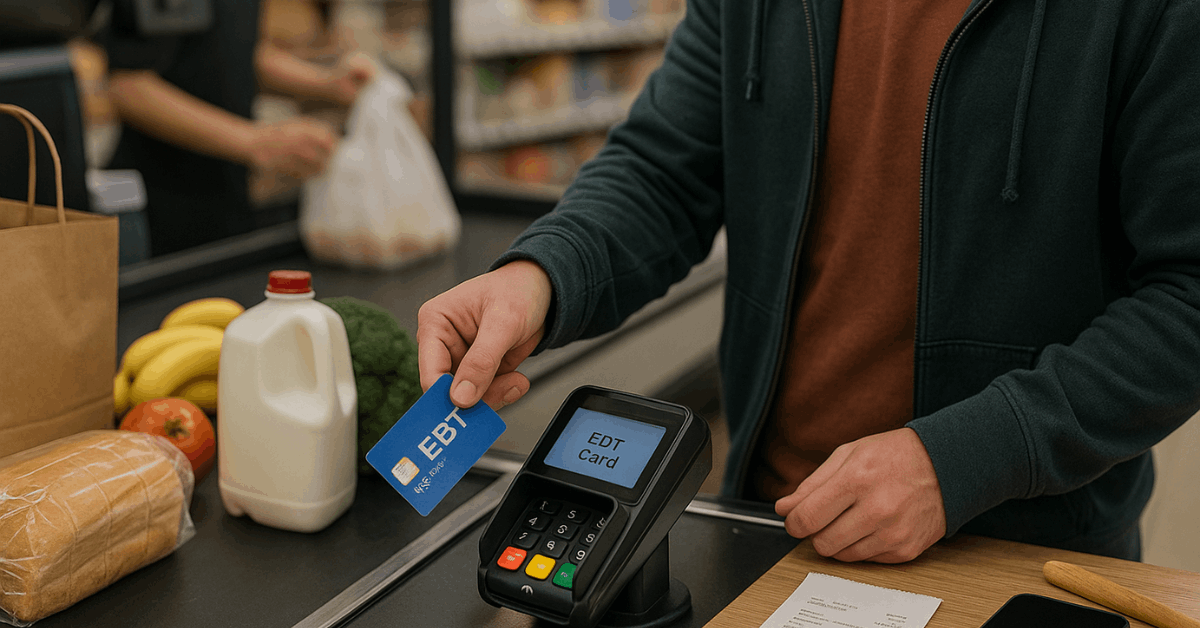
An EBT card works like a secure debit card that pays for eligible groceries at authorized stores and online partners.
State agencies, not federal offices, accept and process applications, conduct brief interviews, request proofs, and issue decisions; successful applicants then receive the EBT card by mail and a PIN to activate it.
Households that qualify generally receive benefits within 30 days, while those meeting expedited criteria can receive help within seven days.
Eligibility Basics in Plain Language
Eligibility rests on household size, income, allowable deductions, and certain resource limits set at the federal level and administered by each state.
Programs use both gross and net income tests, and they update dollar thresholds annually through a cost-of-living adjustment that also resets maximum monthly benefits.
Current figures for fiscal year 2026 run through September 30, 2026 and reflect the latest adjustment from the U.S. Department of Agriculture. Local rules may offer broader categorical eligibility that raises income and asset thresholds, so state portals remain the definitive source for edge cases.
Required EBT Card Documents
Applicants strengthen their case by submitting clear, up-to-date proofs that match what’s entered on forms and discussed during the interview.
Typical EBT card documents include:
- identity (government ID or passport),
- Social Security numbers where applicable,
- pay stubs or benefit letters for each earner, rent or mortgage proofs,
- recent utility costs, dependent care receipts when relevant, and
- medical bills over the allowable threshold for seniors or people with disabilities.
Caseworkers commonly verify all entries and may ask for one or two additional items to complete the file. Interviews can occur by phone in most states, which helps applicants who cannot travel to an office.
How to Apply for SNAP Online: Five Clean Steps
Short preparation prevents delays and unnecessary denials, and the sequence rarely changes across states. Read the scope below, gather items once, and keep images or PDFs ready for upload to speed things up.
- Create or find the correct state portal account, then select apply for SNAP online and start a new application for your household.
- Enter household members, income sources, expenses, and contact details carefully, matching legal names to your identification and benefits letters.
- Upload documents that verify identity, income, residency, housing costs, and any allowable deductions such as dependent care or medical expenses.
- Schedule or complete the brief interview, which many states handle by phone; respond quickly to any follow-up requests for missing proofs.
- Watch messages in the portal and mail for the decision, then activate the card and set a PIN immediately after delivery to prevent misuse.
Processing Time, Interviews, and Status Checks
Most households receive a decision within 30 days after submitting a complete application and finishing the interview; applicants meeting emergency conditions can receive benefits within seven days.
State portals usually include a tracker that lets you check EBT application status, and call centers can confirm any missing proofs or next steps.
Benefit start dates and recertification cycles vary by state, so reading the approval notice closely prevents lapses later.
What You Can Buy and Common Restrictions
SNAP covers most food for home preparation, including fruits, vegetables, grains, dairy, and meat, plus seeds and plants that grow food.
Alcohol, tobacco, hot foods prepared for immediate consumption, and nonfood items fall outside program rules, so plan carts accordingly at checkout.
Authorized retailers handle EBT payments at staffed lanes, self-checkout, or approved online stores where the program operates.
SNAP Benefit Levels for FY 2026
Updated amounts through September 30, 2026, determine the maximum amount any household can receive before applying the income formula.
Benefits equal the maximum for the household size minus 30 percent of monthly net income after allowable deductions; households with zero net income receive the maximum.
Figures below show the current maximums for the 48 states and D.C.; Alaska, Hawai‘i, Guam, and the U.S. Virgin Islands use different standards.
| Household size | Maximum monthly benefit |
| 1 | $298 |
| 2 | $546 |
| 3 | $785 |
| 4 | $994 |
| 5 | $1,183 |
| 6 | $1,421 |
| 7 | $1,571 |
| 8 | $1,789 |
| Each additional person | +$218 |
Work Rules and 2025–2026 Updates to Know
SNAP has general work expectations for many adults and a separate time-limit rule for many able-bodied adults without dependents.
Current federal guidance lists an 80-hours-per-month standard through work or qualifying programs for those subject to the time limit, plus a set of exemptions related to age, health, pregnancy, caregiving, and other factors.
Several updates took effect in 2025, including changes to the age range subject to the time limit; state agencies can explain how those changes apply in each county and whether waivers are available.
Online Purchasing and Retailers, Quickly Clarified
Households use the EBT card to shop at authorized stores and, in many states, at approved online grocers.
Retail business owners who want to accept SNAP complete a separate federal process, and that process is free, online, and handled only by USDA’s Food and Nutrition Service.
Retailers create a Login.gov account, finish the SNAP retailer application within 30 days of starting, await authorization, then choose and program point-of-sale equipment using the provided FNS number. Exceptions for free equipment remain for limited categories such as eligible farmers’ markets and certain nonprofit providers.
Tips for Submitting a Stronger Application
Small habits reduce delays and prevent avoidable denials once the file reaches a caseworker.
Keep scans readable, note case numbers on every page, and respond to follow-ups within 48 hours when possible.
Enter pay periods exactly as shown on stubs, and list rent, utilities, and dependent care totals consistently across forms and documents. Track renewal dates on a calendar so recertification notices never arrive as a surprise.
In Summary
An organized EBT Card Application improves approval speed, reduces errors, and helps maximize lawful deductions that set monthly SNAP benefit amounts.
State agencies run the process end-to-end, so state portals and phone lines remain the fastest path to answers, status checks, and replacement services.
Updated FY 2026 benefit levels and 2025 work-rule changes are in force as of 2025; local notices explain any state-specific adjustments and waiver coverage.